
Long-Term Marine Litter Monitoring on the ReeF
Marine litter is often discussed in headlines and statistics, but its real impact unfolds slowly, directly on the reef.
Since 2018, a long-term monitoring project at Coral Eye Marine Outpost has been documenting how plastic waste accumulates on beaches and coral reefs, and how it affects corals over time.
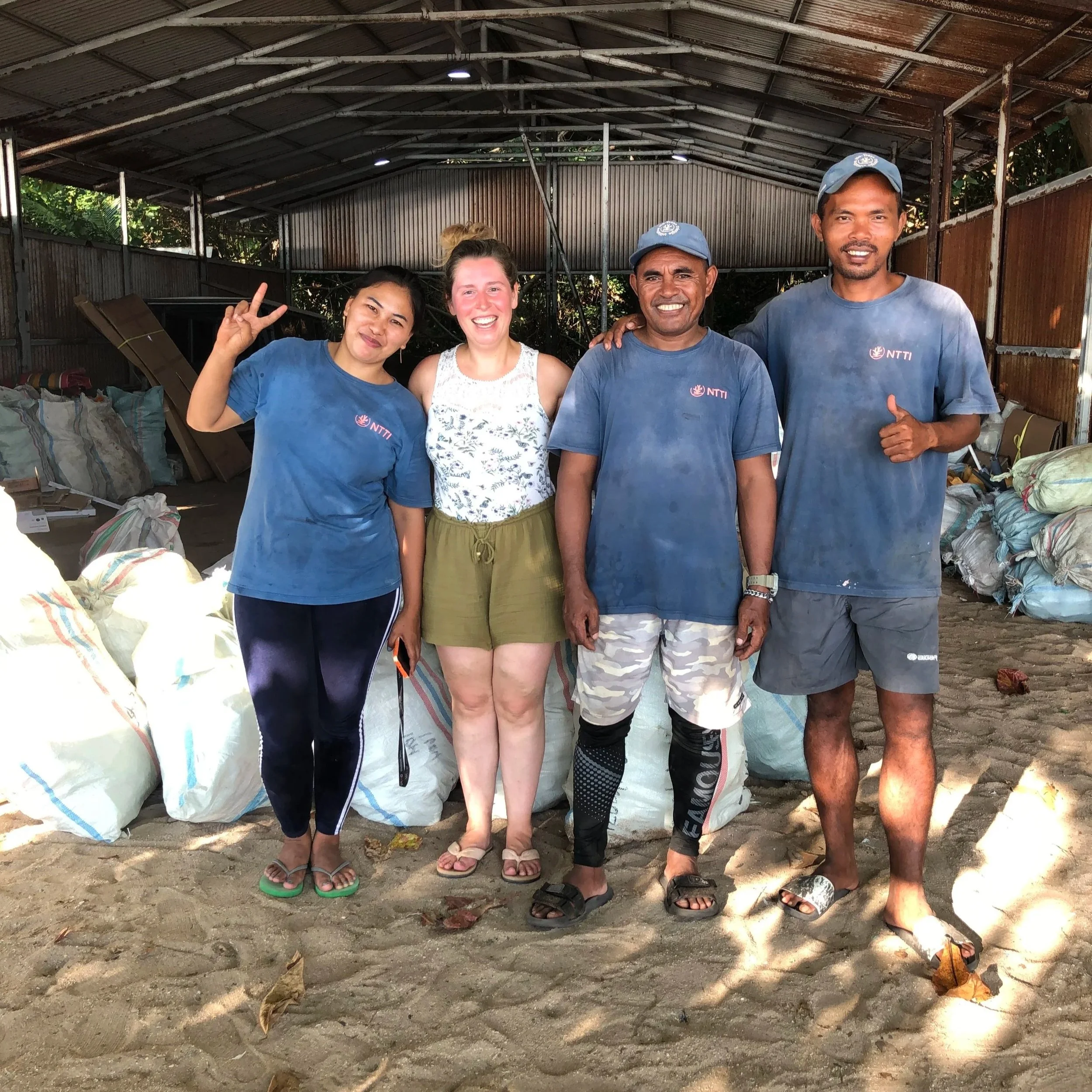
Jasmin Mueller’s Research on Human Impacts on Coral Reefs
Jasmin S. Mueller is a marine researcher and PhD candidate at the Institute for Chemistry and Biology of the Marine Environment (ICBM), Carl von Ossietzky University of Oldenburg, Germany.
Her research focuses on anthropogenic impacts on benthic communities in coastal marine ecosystems, including coral reefs and intertidal systems such as the Wadden Sea.
Jasmin first came to Coral Eye in 2018 for her Master’s thesis on marine litter pollution in beach and reef environments, supported by a scholarship from the No-Trash Triangle Initiative (NTTI). Since then, she has returned every year to continue monitoring work and to teach international students in coral reef ecology, marine litter pollution, and underwater scientific methods, together with Prof. Peter Schupp (ICBM).
Marine Litter Pollution and Its Impacts on Corals
Indonesia is one of the world’s largest contributors to mismanaged plastic waste, while at the same time hosting some of the planet’s most diverse coral reef ecosystems. This contrast makes places like North Sulawesi critical for understanding how marine litter interacts with reef environments.
At Coral Eye, Jasmin’s research focuses on multi-year monitoring of marine litter accumulation in both beach and reef habitats, with a specific emphasis on submerged and entangled debris affecting corals. Previous studies have already shown that marine litter can shade corals, cause physical damage, and increase stress and disease. The question is not only if plastic impacts reefs, but how these impacts change over time, and whether local actions can make a measurable difference.
How the Monitoring Works
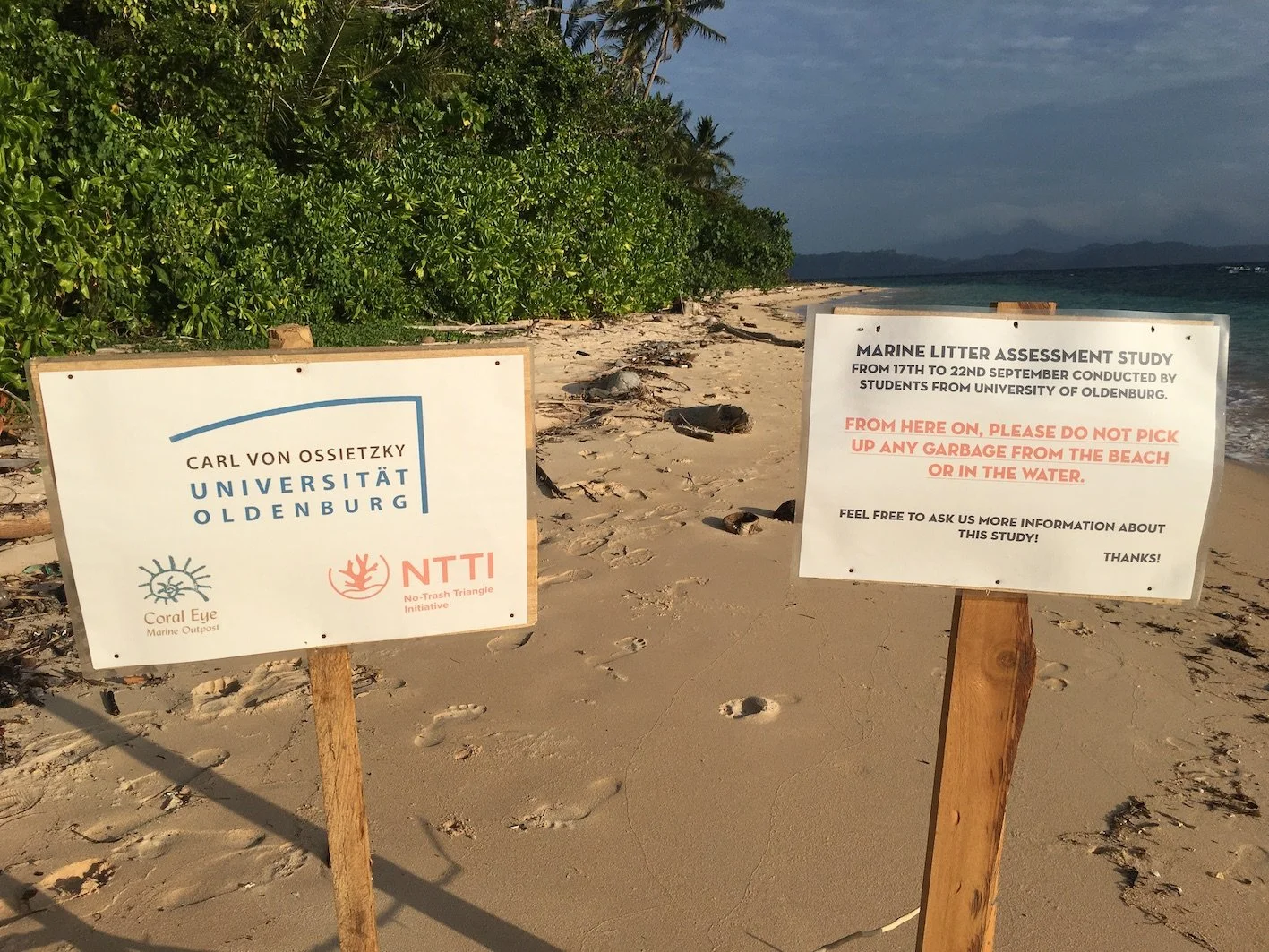
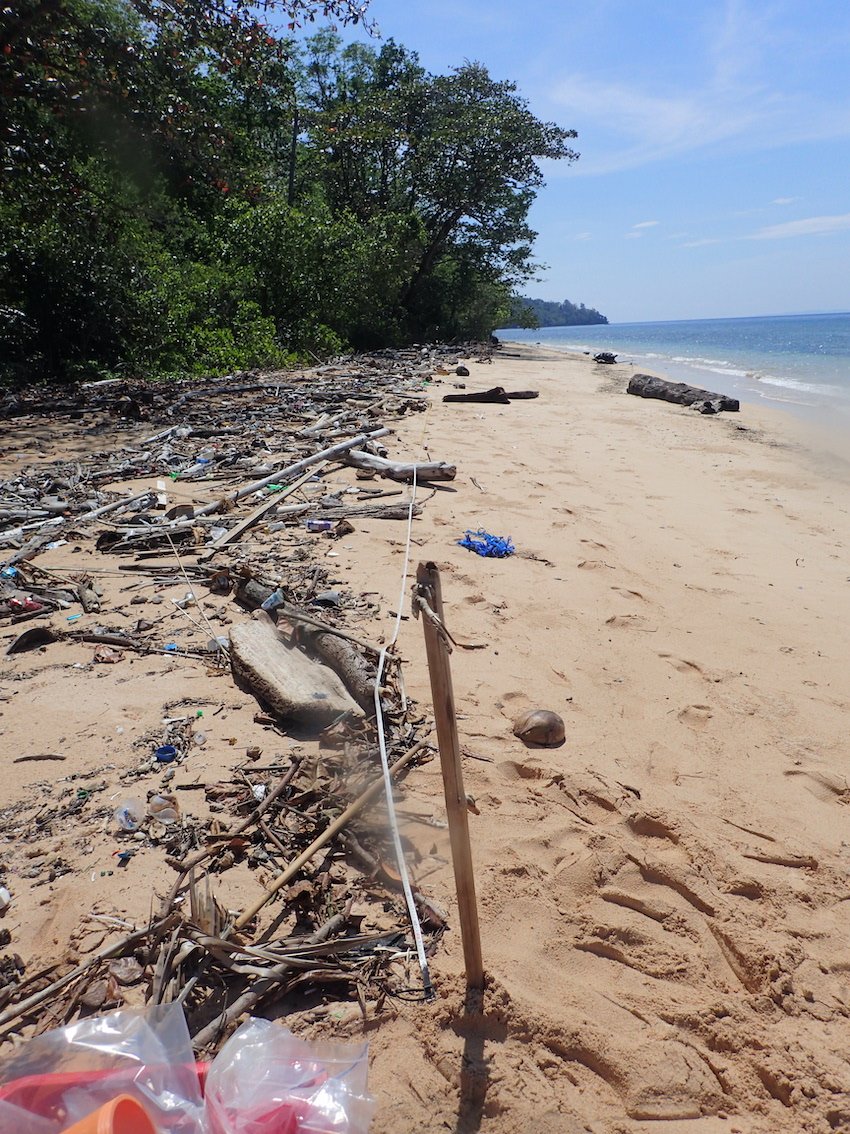
To document marine litter washed ashore, fixed transects were established at the Coral Eye beach and house reef. These zones are easily accessible by foot or snorkeling and are monitored annually over a five-day period.
During monitoring days, washed-up litter within the transects is collected, counted, weighed, and classified into categories. The sorting and classification take place at the No-Trash Triangle (NTTI) sorting station, with close collaboration between researchers and the NTTI team. To ensure reliable results, monitored areas are intentionally left uncleaned during survey periods.
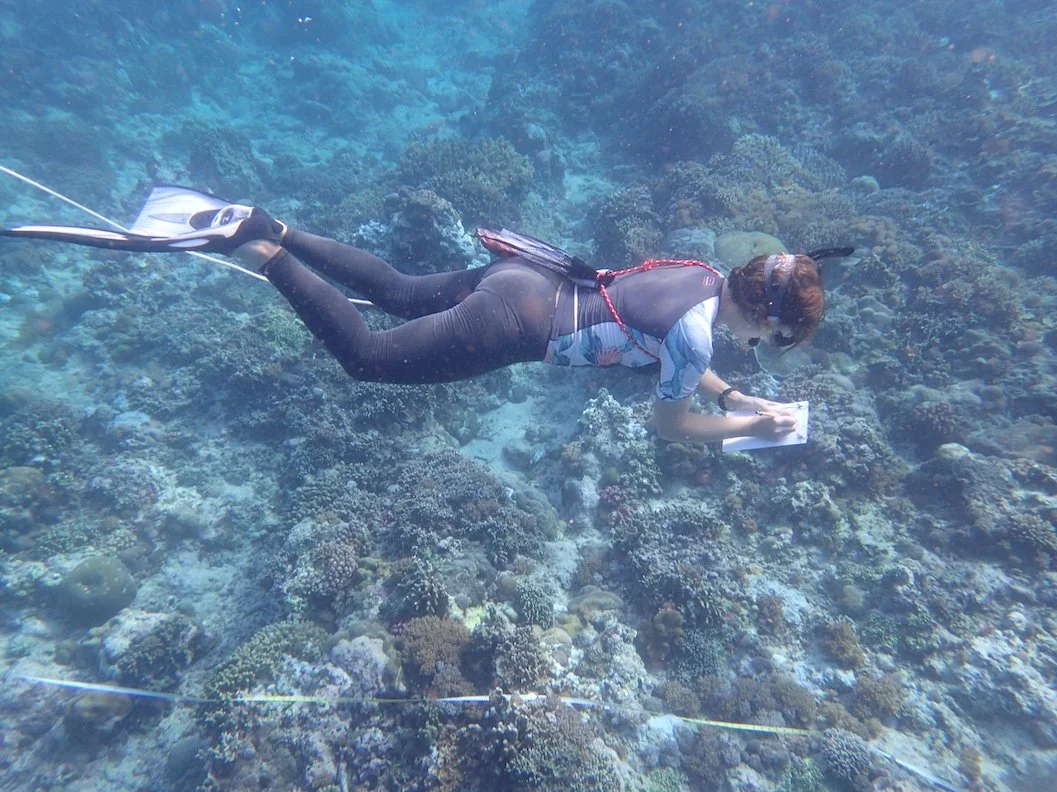
To assess direct impacts on corals, Jasmin uses a timed swim method. While snorkeling along the house reef, all submerged and entangled litter items found on hard and soft corals are documented within a defined time frame. This approach allows researchers to quantify not only the amount of litter present, but also how frequently corals are affected.

Why Long-Term Monitoring Matters
This project goes beyond data collection. Each year, Bachelor’s and Master’s students learn hands-on how scientific monitoring works, from field methods to data analysis and interpretation. At the same time, repeated surveys make it possible to detect changes in litter accumulation and coral exposure, potentially linked to local initiatives, waste management improvements, or policy measures.
Equally important is the ongoing exchange between researchers, students, local communities, tourists, and conservation organizations. According to Jasmin, this multi-level dialogue is essential: raising awareness, sharing results, and translating science into action are key to protecting fragile reef ecosystems.
Scientific Contributions
Findings from this work have contributed to several peer-reviewed publications, including:
Mueller et al. (2022) – A comprehensive approach to assess marine macro litter pollution and its impacts on corals in the Bangka Strait, North Sulawesi, Indonesia, Marine Pollution Bulletin, 175, 113369. https://doi.org/10.1016/j.marpolbul.2022.113369
Mueller & Schupp (2020) – Shading by marine litter impairs the health of Indo-Pacific corals, Marine Pollution Bulletin, 158, 111429. https://doi.org/10.1016/j.marpolbul.2020.111429